China Top Eggs shell Label Trends for Global Buyers?
As the global market for eggs continues to expand, the significance of the "Eggshell Label" grows dramatically. This label, which provides vital information about the quality and origin of eggs, is becoming essential for buyers. Understanding the trends around this label is crucial for global buyers aiming to make informed decisions.
In China, the eggshell label has seen innovative developments. New technologies are being used to enhance traceability and transparency. Buyers are now more informed about production standards and nutritional values, fostering trust. However, not all labels are consistent or clear, which can lead to confusion. It’s vital for importers to recognize these discrepancies.
Buyers must pay attention to these trends. While eggshell labels offer valuable insights, consumers need to question the authenticity behind them. Not every label reflects true quality. The ongoing evolution of these labels poses both opportunities and challenges. Recognizing the importance of reliable eggshell labeling will ultimately benefit the entire global egg market.

China's Egg Shell Labeling Standards: A Comprehensive Overview
China's egg shell labeling standards have evolved significantly, adapting to both domestic demand and international scrutiny. These standards outline critical information, such as the origin, production methods, and quality parameters. Clear labeling is essential for buyers, ensuring transparency in sourcing.
Tips: When evaluating egg shells, look for specific details. Check if the label includes farm identification and production dates. These components can be crucial in assessing freshness and quality.
Buyers should also consider color coding. Different colors can indicate various farming practices. For instance, brown eggs might suggest free-range production, while white eggs often indicate conventional practices. However, not all color distinctions are accurate indicators of quality.
In practice, labeling issues may arise. Some producers might not fully comply with standards. This inconsistency can lead to confusion among consumers. Regular audits and compliance checks are vital for ensuring that standards are met reliably. Understanding these nuances helps in making informed purchasing decisions.
China's Egg Shell Labeling Trends for Global Buyers
Emerging Trends in Egg Shell Labeling for Export Markets
The egg market is witnessing significant changes in shell labeling, especially for export. Global buyers are increasingly prioritizing clear and informative labels. According to industry reports, approximately 70% of consumers prefer eggs with transparent information about sourcing and production methods.
Emerging trends point to the demand for sustainability and animal welfare information. Labels are shifting toward showing farm names and certifications. Research indicates that around 55% of consumers are willing to pay a premium for eggs labeled as organic or free-range. This reflects a broader trend where health-conscious choices are driving purchasing behavior.
Tips: Focus on clear labeling. Highlighting farming practices can build consumer trust. An appealing design can catch buyers' eyes. However, brands must avoid misleading claims. Transparency in labeling can enhance brand loyalty but requires careful management to prevent backlash. It's essential to strike a balance between marketing and truthfulness. Overall, the landscape of egg shell labeling is evolving, and companies must keep pace with consumer expectations to thrive in competitive markets.
China Top Eggs shell Label Trends for Global Buyers
| Label Type |
Popularity (%) |
Key Features |
Preferred Markets |
| Organic |
45% |
Non-GMO, Free-range |
North America, Europe |
| Free-range |
30% |
Access to outdoor, Welfare standard |
Australia, New Zealand |
| Nutraceutical |
15% |
Enhanced with Omega-3, Vitamins |
United States, Japan |
| Cage-free |
10% |
No cages, More space |
European Union |
Impact of Consumer Preferences on Egg Shell Labeling Practices in China
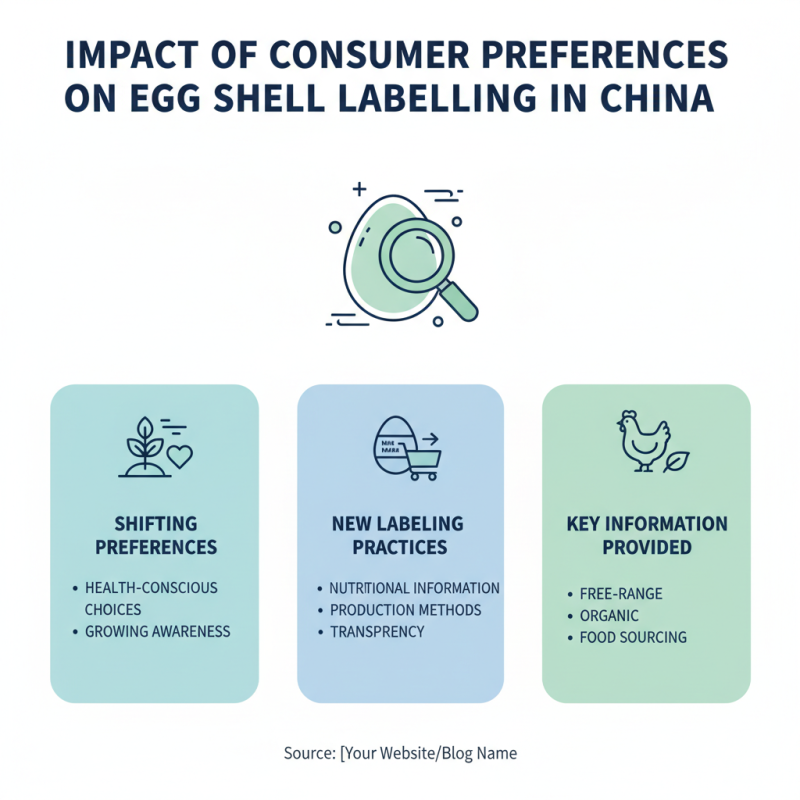
In recent years, consumer preferences in China have dramatically influenced egg shell labeling practices. As health-conscious choices gain momentum, buyers are increasingly interested in clarity and transparency. Labels now highlight nutritional information. They often communicate production methods, such as free-range or organic. These changes reflect a growing awareness among consumers about food sourcing and health impacts.
Tips: Look for labels that specify the farming method. Understand the significance of terms like "cage-free" and "organic." These labels can indicate higher animal welfare standards and better nutrition.
However, not all labels provide reliable information. Some terms may be misleading or vague. Consumers must remain vigilant about what they read. Education is key to discerning between genuine benefits and marketing hype. This has led some buyers to question the authenticity of the claims made on egg cartons, revealing a need for standardized labeling practices.
Tips: Research label regulations in China. Knowledge of local standards helps ensure you make informed choices. Comparing brands can also clarify which consistently deliver quality eggs.
Regulatory Changes Influencing Egg Shell Labeling Trends in China
China's egg industry is undergoing significant transformations in labeling trends, closely influenced by regulatory changes. The recent implementation of the National Standards for Egg Products has compelled producers to enhance transparency. This move aims to provide consumers with essential information about the origin, quality, and safety of eggs. According to industry reports, approximately 70% of consumers in China now prefer eggs with clear labeling.
Moreover, authorities are monitoring compliance strictly. In a survey conducted by the China Animal Agriculture Association, 68% of respondents acknowledged the importance of labeling in their purchase decisions. Yet, challenges persist. Some producers struggle to meet the new standards due to costs and logistics. This has led to inconsistencies in how eggs are labeled across different regions. Transparency is desirable, yet achieving uniformity remains a work in progress.
As a result, global buyers looking to source eggs from China must navigate these complex dynamics. The evolving regulations highlight the demand for higher product standards. However, gaps in compliance can cause confusion. Buyers should assess the labeling practices of suppliers carefully. Reliable sourcing requires not just attention to price but also to the integrity of labels. Understanding these trends will benefit global buyers in making informed decisions.
Global Market Demand: How China's Egg Shell Labels Adapt to Buyer Needs
In recent years, China's egg shell labels have seen significant transformations to meet global market demands. The global egg market is projected to reach $225 billion by 2025, creating a pressing need for transparent and informative labeling. Chinese producers are increasingly focusing on sustainability and traceability in their packaging. Research indicates that 70% of consumers are willing to pay more for products with clear labeling, reflecting buyers' evolving concerns.
Chinese exporters are adapting to these new expectations by incorporating QR codes on egg shell labels. This technology allows consumers to trace the origin and production methods. However, challenges remain. Not all producers are fully compliant with international standards, creating inconsistencies in labeling. A recent industry report showed that up to 30% of egg producers struggle to provide complete and accurate information on their products.
Moreover, there is an ongoing discussion about animal welfare practices. Reports suggest that consumer awareness about these issues is rising, potentially affecting purchase decisions. Producers must navigate these complexities while keeping up with digital innovation. Striking the right balance between consumer preferences and production realities remains an area that requires ongoing improvement and reflection.